Sofii Belling Harding responds to the 2025 First Peoples-led Exhibition, Dancing Hands, curated by Maya Hodge.
It is immediately clear that Dancing Hands more than succeeds in illuminating the rich tapestry of contemporary Aboriginal art, craft and design by six phenomenal Aboriginal women artists. Although, as Lardil Curator Maya Hodge states, “Our practices are not boiled down to just ‘craft’ or ‘fine art’; our practices exist beyond the fragility of the western art canon. They are rooted in our sovereign spaces, generational love, knowledge and healing practice.”[1] What each artist also brings is a level of sophistication, knowledge, and expertise through their practice, with the exhibition as a whole highlighting both the skill and diversity of Blak women’s artistic endeavours.
As a Blakfulla entering the space, I am attuned to how this place speaks directly to me. Our world is underpinned by ‘relational accountability’[2], and this is the primary reason we often walk through the doors in the first place; to support, connect, and experience a shared value together. Through my lens, I am constantly evaluating if my reality is being reflected, and most importantly, represented truthfully; this is even more relevant while taking in an exhibition by and about my own people. It is this relational lens that a First Peoples Curator must also see through, in order to realise their vision and responsibility. While you may not immediately think of it, the way a story is pieced together and narrated is also an artform which must be recognised; making this Curator the seventh artist. While it could be seen as a challenge to showcase Aboriginal women artists from all over the country, Maya allows each artist’s work to become an anabranch of our cultural connectedness and continued evolution of our storytelling.
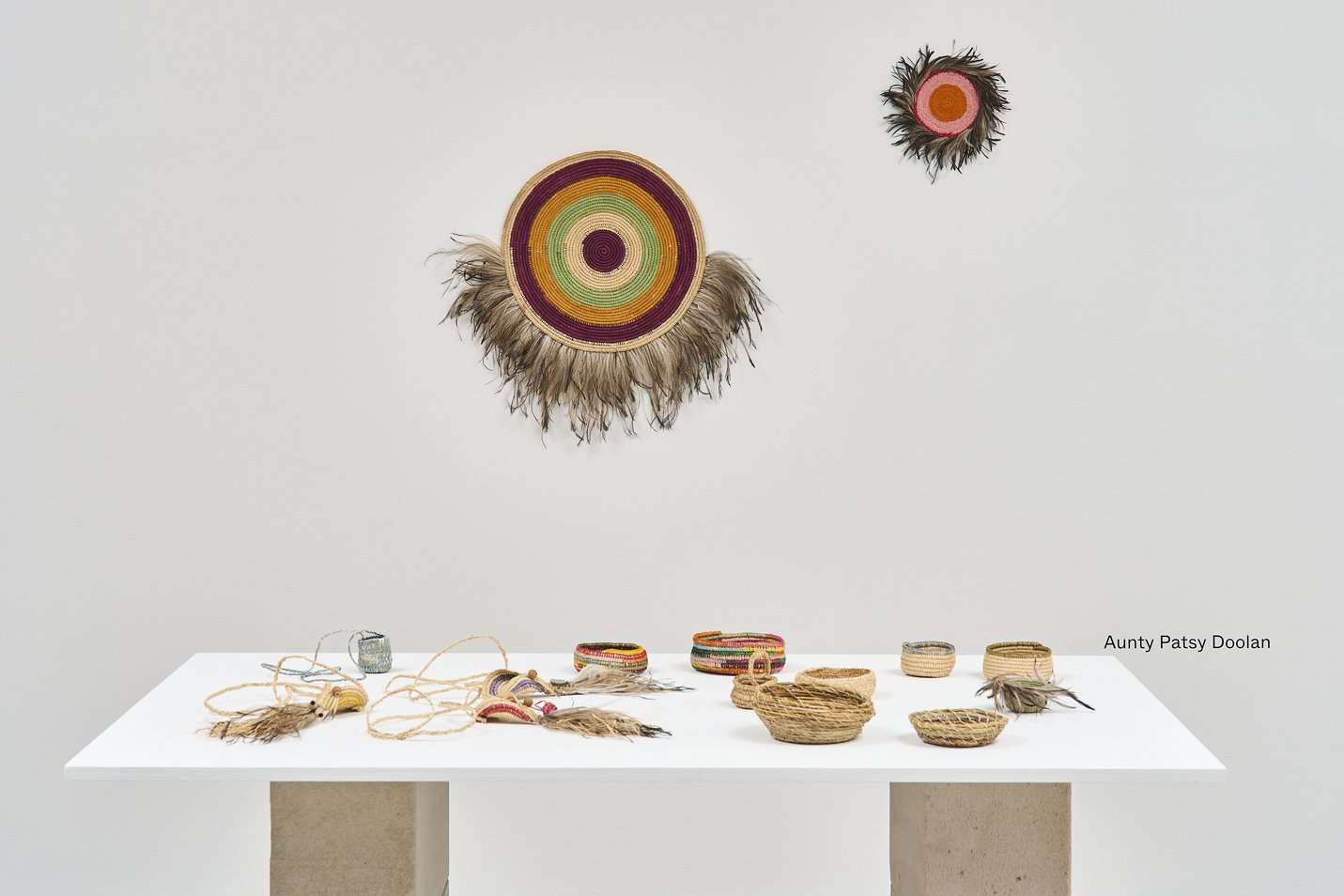
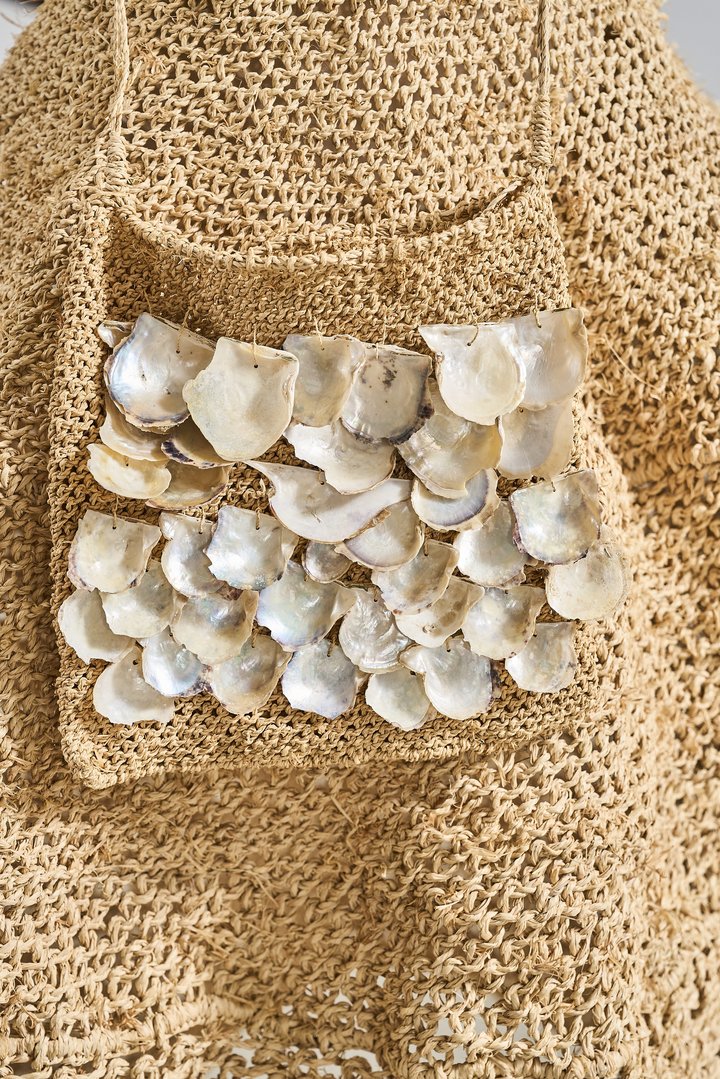
We begin the exhibition with Kyra Mancktelow’s breathtaking woven wedding dress, river reed necklace, and shell-adorned dilly bag. While we are instantly consumed by the sheer beauty of the work and the skill required in its creation, our mind is turned to consider the reality of the discriminatory policies in which our mob were required to seek permission from the government to marry, hence its title ‘Unconstitutional Love II’. Kyra’s work urges the viewer to look beyond the surface and engage with this nation's haunting legacies, as she reinscribes colonial narratives into acts of resistance and truth-telling.
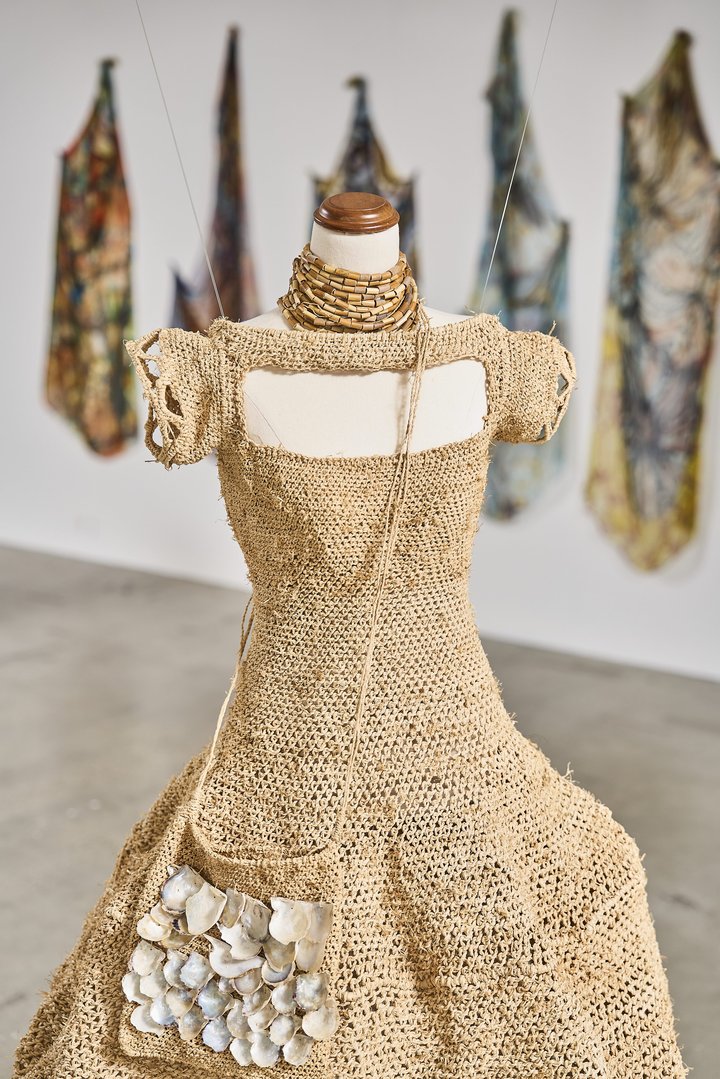
Aunty Patsy Doolan’s woven jewellery made from native materials sourced from her Country – the collection of each emu feather, echidna quill, quandong, ininti and sandalwood seed – connects her closer to her family and the land of her people. Her art is an expression of this connection, which is embedded within every piece, and as a community woman at heart, she shares these skills with others so that they may feel the same pride and joy she experiences through her practice.
Molly Mahoney’s striking black dyed river reed necklaces drape along a white wall, cascading down to reveal their full length and beauty. The necklaces were traditionally gifted to mobs passing through Country as a gesture of safe passage, respect and care; this same care is given throughout the process of their recreation. Molly gathered the materials for this work with her family – a deeply communal act – and with each piece she honours her lineage and continues their stories of survival. She incorporates echidna quills to symbolise strength and protection; feathers which are inspired by her great aunt – the family’s knowledge holder – and shells to honour the ocean women she descends from; all reflecting her deep respect for Country, family, and the power of matriarchal knowledge.
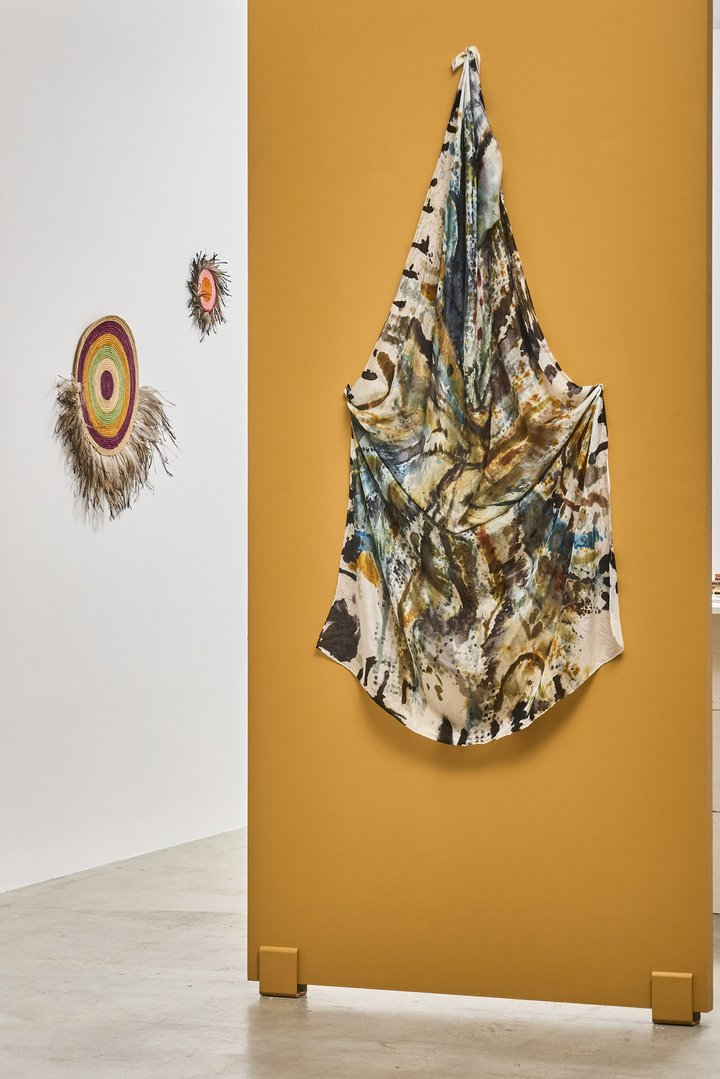
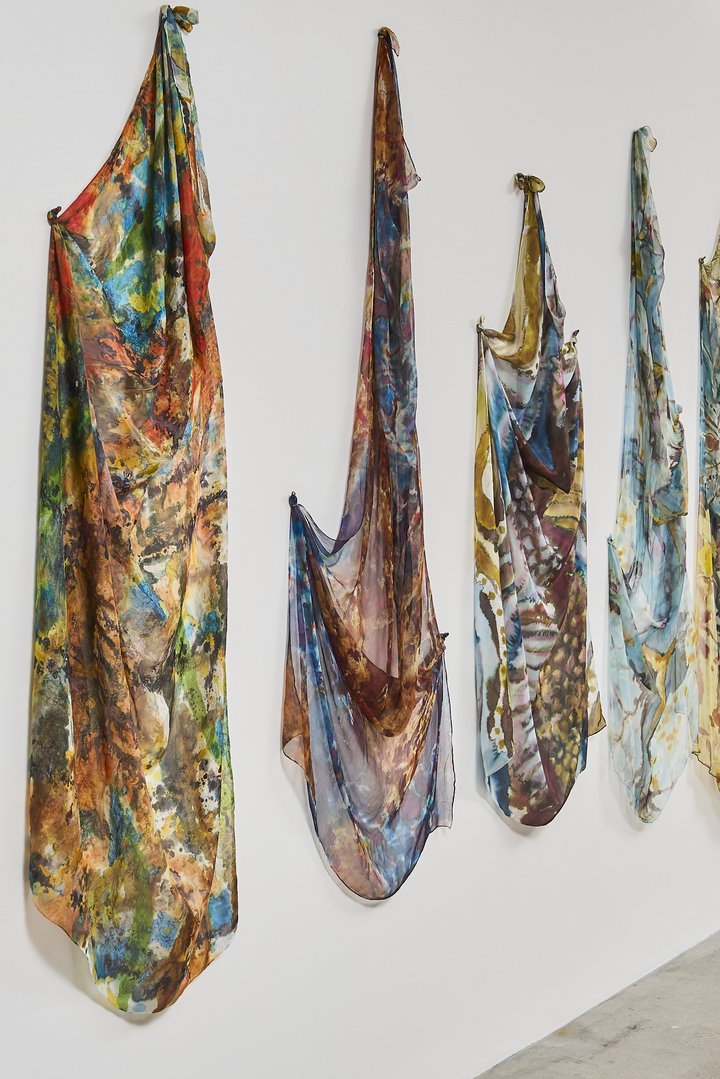
Our attention is captured by Lyn-Al Young’s eight hand painted silks swaying gently along the main wall and partition, each with their own unique pattern, colours, and cultural meaning. Her creative process is one that is intentional and embodied; a ceremony which intwines her ancestral knowledge with her spiritual calling; to be a creator of healing, peace and fighter for truth. We witness this in the naming of her pieces, ‘Ngunggadhaany – Carrier’ and ‘Yulendji Laang – Growing in knowledge and deepening connections’, which are an extension of her grandmothers’ legacies and the values she wishes to pass on to all who encounter her work.
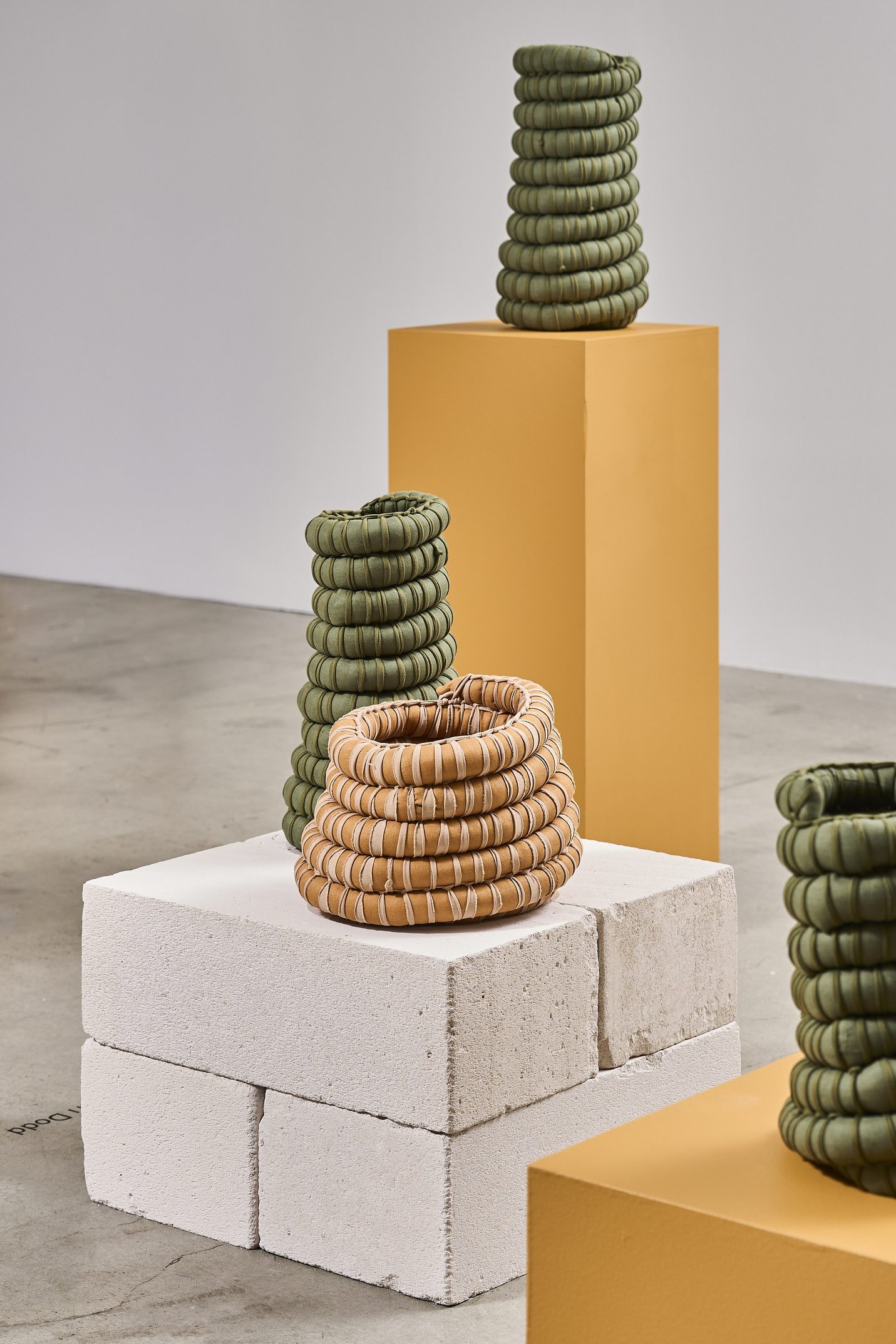
Standing among Carly Tarkari Dodd’s woven soft sculptures made from contemporary materials, placed upon their own plinths at varying heights, creates a powerful presence as you pass by each vessel – their unique forms, earth-toned hues, and patterned stitches. This traditional Ngarrindjeri weaving technique was a cultural practice once lost for generations in her family, but through her dedication to cultural revitalisation, she demonstrates through her artistry how the reclamation of our inherent birthrights serves to not only preserve ancestral knowledge, but deepen the very fabric of our collective memory.
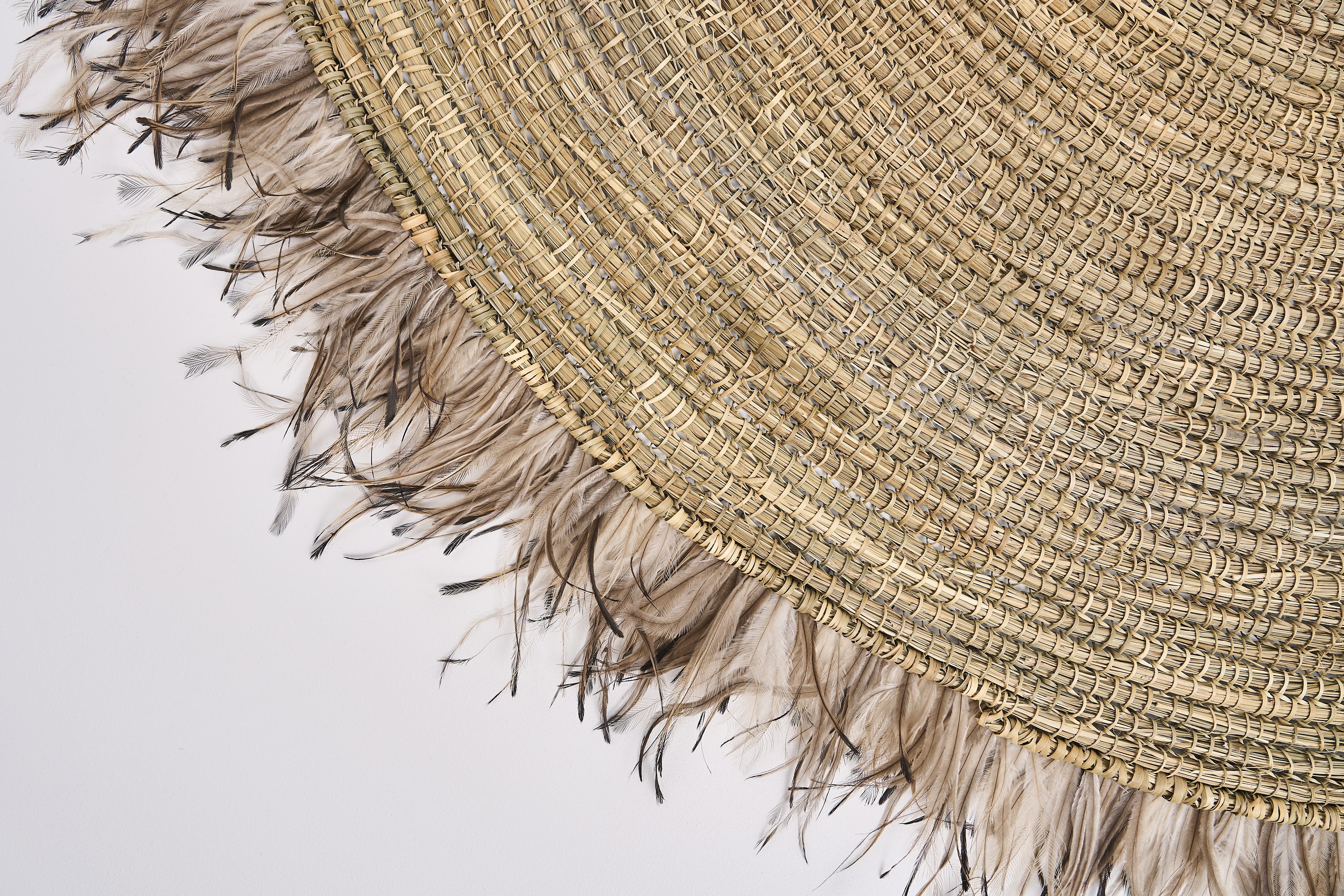
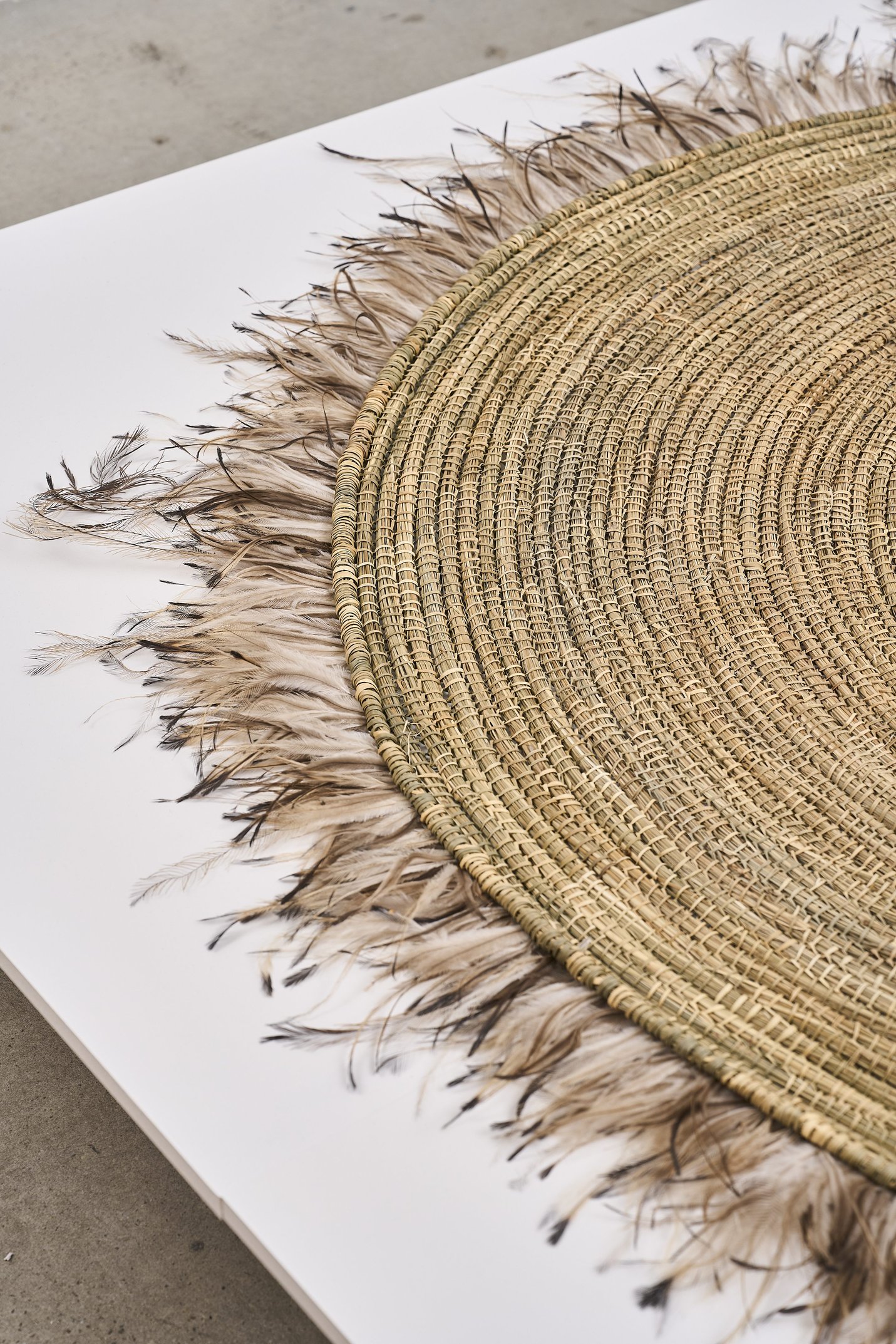
The final piece in the exhibition, Amy Hammond’s extraordinary multi-media work titled ‘Dhinawangu Walaaybaa’ (Emu Country), honours Dhinawan (Emu), who has always lived on Gamilaroi Country – her ancestral lands. A large circular weaving, made of lomandra and adorned with emu feathers, represents the home and nest of Dhinawan. Directly above, a video loop shows a ceremonial male dancer with accompanying vocals, which depict Dhinawan Bubaa (father) taking care of his eggs. This work speaks to the love and sadness Amy feels for Dhinawan, who was labelled a pest and culled in great numbers, representing the effects of colonisation on our people, Country, and kin.
These artists have woven their lenses and brought our peoples stories into focus. Through their distinct practices, they have shown us how they experience the world, and it is in their response that I have seen myself reflected and represented truthfully. Each work speaks to our reality of having suffered unimaginable cruelty, while demanding that our stories of survival and intergenerational love are also told; to others, but, most importantly, to ourselves.
Craft Victoria is not a Blakfulla space, however I enter knowing that this is the fifth iteration of their First Peoples-led exhibition series; an initiative established in 2020 to support the development of contemporary Blakfulla curatorial practice within craft and design. In the spirit of relational accountability, a Mob Only Weaving Workshop was included in the program, presented by two of the Artists and participated in by the Curator, reinforcing the importance of creating Blak spaces that are bound by reciprocity and being in community with one another – no matter where we are. I feel incredibly proud of the artists involved, and wholeheartedly content in knowing that my daughter will always understand the power that our women hold as carriers of culture, protection, and healing.
Sofii Belling Harding belongs to the Yorta Yorta, Wiradjuri, South Sea and Meriam peoples, and has lived on Wurundjeri Country all her life. She is a qualified Youth Worker and multidisciplinary artist, community arts worker, writer, producer and radio host. She has always been connected, involved and invested in the well-being of her community and strives to create more opportunities for those in the creative industries.
References
[1] Maya Hodge, A Labour of Love: dedicated to the craftsmanship of my family, Craft Victoria, September 30, 2021.
[2] Shawn Wilson. Research Is Ceremony: Indigenous Research Methods (Black Point, NS: Fernwood Publishing, 2008).
Installation photography: Claire Armstrong
