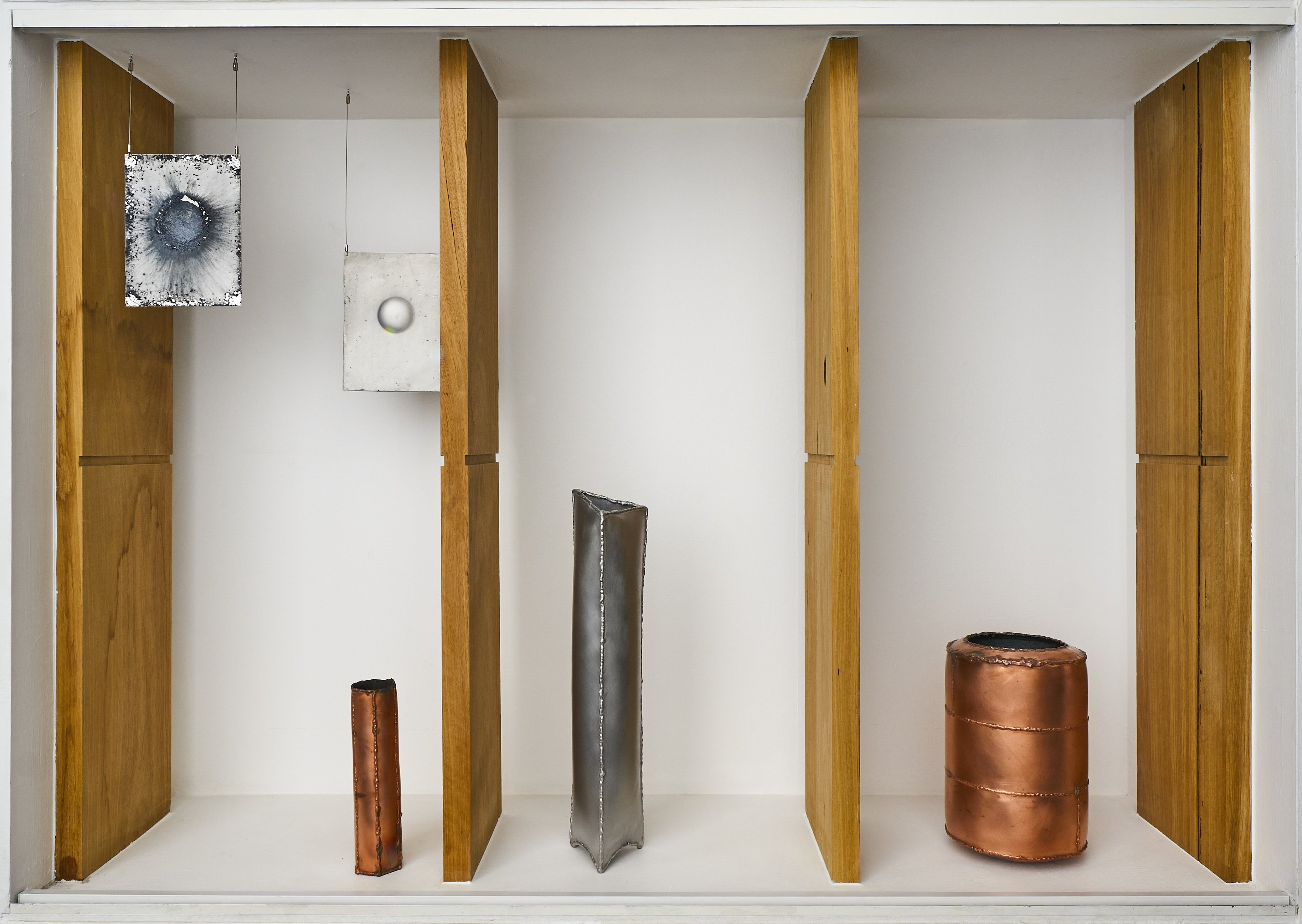
Early gunpowder and fertiliser share the same key ingredient: potassium nitrate. This realisation gave rise to a thought that the same material used during colonisation as a blasting medium to disrupt the Western Volcanic Plains of Victoria and its delicate ecology of native grasses may also have, at times, been accidentally deployed as a fertiliser through the simple slip of a hand.
It raises the fact that the survival of this critically endangered ecology is tied, in part, to such unintended consequences. Today, it persists in overlooked spaces, roadsides, train lines, and cemeteries, places overlooked by pastelists or developers. One of the most striking examples is Jack’s Magazine, a gunpowder storage facility along the Maribyrnong River. Built to contain volatile materials, its walls have instead protected the embankment for nearly 150 years, holding back urban expansion. I like to think that native grasses and orchids have flourished here not despite gunpowder but because of it. That all those years ago when gunpowder travelled these paths clumsy hands fertilized the ground.
This project extends my earlier Explosive Forming series into a body of objects developed through my design studio, CUD_works, where sculptural processes are reworked into everyday objects that speak critically about the world around us. To engage this duality, I have created a series of vessels that utilise gunpowder as a creative force. Sealed copper and aluminium forms are filled with an explosive charge and detonated; the blast expands their rigid geometries into swollen, organic shapes in an act of growth. The explosive does not destroy, but forms, creating vessels designed to hold and nurture plant life.