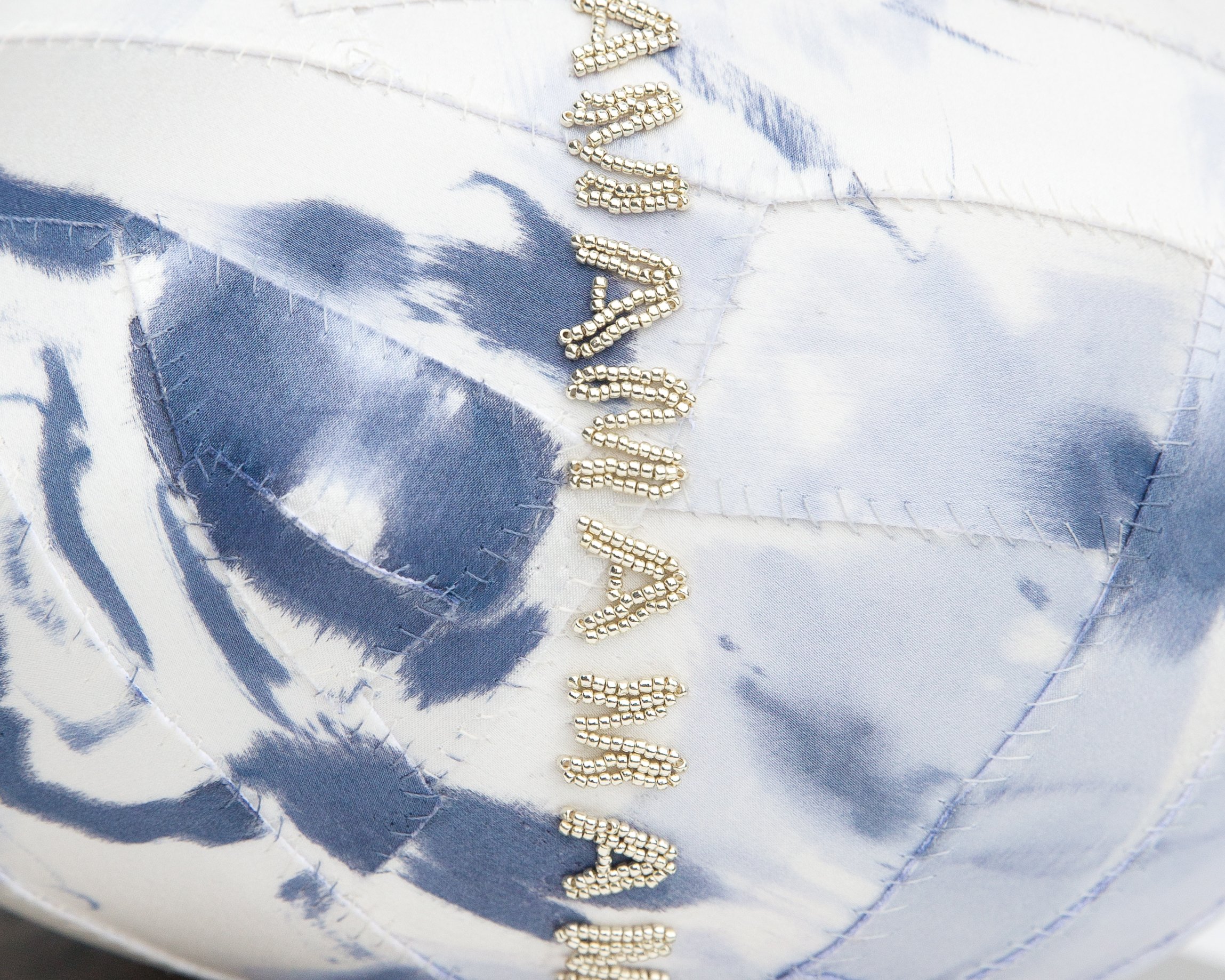
In the Shape of Us features three sculptures created collaboratively by MeiMei Hodgkinson and her two young children. The project draws inspiration from Matisse’s Virgin and Child (1949), Picasso’s Mother and Children with an Orange (1951), and Baselitz’s Untitled (Red Mother with Child) (1938).
Rather than treating motherhood as a subject to be represented, these sculptures foreground the agency of both mother and children. No longer muses, they become artists in their own right, capable of narrating their own stories.
Rejecting traditional sculptural materials such as bronze and stone, the works are made from printed linen, recycled silk, handmade Xuan paper, and ceramics—materials embedded with cultural and historical significance in China. As a first-generation Chinese migrant mother and artist, MeiMei Hodgkinson treats the process of making as integral to the work itself. Co-creating with her children becomes a way to pass down cultural knowledge while exploring new ways of knowing and being.
By positioning these collaboratively made works alongside European "masters", Hodgkinson challenges dominant ideas of excellence and monumentality. Her children’s mark-making disrupts conventional notions of skill and questions institutional definitions of rigor. Instead, the works suggest that artistic value lies not only in solitary mastery, but also in authenticity and shared meaning-making.
About the artist
MeiMei Hodgkinson is an emerging Chinese Australian multidisciplinary artist who currently lives and works on Bunurong and Wadawurrung lands. Through photography, sculpture and textiles, MeiMei challenges the boundaries between fine art and traditional craft, while blending the visual languages of Eastern and Western cultures to reflect the complexities of her own bicultural identity.
Inspired by her experiences as a first-generation migrant artist and mother, MeiMei’s work is driven by autobiographical narratives, exploring themes around migrant identity and motherhood. She often incorporates materials and techniques traditionally used by women throughout history to subvert the hierarchies of materials in art ecologies, challenging the concept of permanence and monumentality.